Certified Asbestos Removal
Certified Asbestos Removal

Do I Need A Certificate From New York State?
If you work in New York State, then you must be certified by the New York State Department of Labor Asbestos Control Bureau Asbestos Licensing and Certification Unit (memorandum on New York City Asbestoswork).
In addition, New York City Department of Environmental Protection certified asbestos investigators, like all disciplines, must complete annual refresher training, regardless of the expiration date of their New York City Department of Environmental Protection or New York State Department of Labor certifications. This policy is outlined in the Asbestos Safety Training Program Memorandum 2009-01.
Asbestos Program
The earth's natural mineral asbestos is extracted from it. Because of its durability and strength, as well as insulation and fire resistance properties, asbestos was widely used in common building materials.
Today, asbestos materials look much different. Asbestos is found in many building materials, including but not limited to, drywall systems, textures, plasters, pipe insulation, metal air ducts, blown-in insulation, flooring, roofing, caulking, and sealant, inside boilers, pipe chases, and fireplaces.
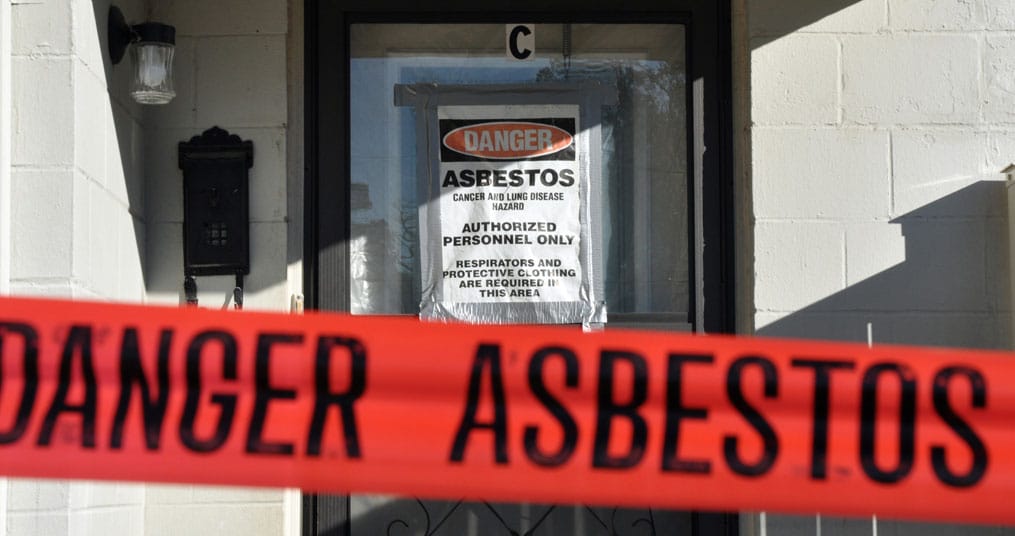
Asbestos is hazardous to the environment and human health. When the material is disturbed, microscopic fibers can be released into the atmosphere. These fibers can enter the lungs when inhaled and can damage the lung tissue.
Asbestos-containing building materials are generally not dangerous if they're in good shape and not touched or disturbed. However, during general renovation/remodel or demolition work, these asbestos materials can be impacted and release asbestos fibers into the air.
Alabama Asbestos Contractor Accreditation Program
Alabama Department of Environmental Management (ADEM), requires accreditation to carry out asbestos-related activities in the state. All other disciplines are subject to accreditation under both state and federal law.
These are the steps to get accredited in Alabama:
- Ensure all applicants have successfully completed their most recent training from one of Alabama's approved trainers.
- See list of approved training providers using the lists below.
Step 2 - Apply & Pay for individual asbestos certification.
- You must meet all the Asbestos Certification Qualification requirements
- Online Application (crimson button in the top right of this page). Request a copy of the.pdf application from Rhonda Hester, Program Specialist (rhester@ua.edu).
- All required documents must be submitted or uploaded with the application
- Submit payment. After submitting the application, you can send a check/money order or UA SafeState will contact you to make payment. Processing time for applications - Once all documents have been received and submitted, processing can take up to 30 business days.
- Once processed, the applicant will receive credentials via email and be issued a UA SafeState ID card (via mail) and certificate (via email).
Step 3 - Firm Certification. (Asbestos Supervisors and Asbestos Workers Only)
- Here is the form 497) to certify that your asbestos abatement company has been certified by the Alabama Department of Environmental Management.
Asbestos training and certification requires both initial and ongoing accreditation. Re-registration is possible by yearly refresher training.
Here's what you will need:
- An active Contractor Registration with the WA Dept. Labor and Industries.
- A Certified Asbestos Supervisor on your payroll.
- A completed L&I Asbestos Contractor Application for Certification.
- A completed application and payment submitted to L&I (Instructions on application)
Asbestosis is an extremely toxic mineral which can cause lung cancer and mesothelioma. Asbestos fibers are microscopic, and are used in many different building materials. Asbestos has not been banned, and is still being used today. If asbestos containing materials are disturbed, the toxic fibers can contaminate the building, and be breathed in by anyone who lives or works in the area. Cleanup of a contaminated building can dramatically increase the cost, and delay the project.
Both building owners and contractors share the responsibility of asbestos testing during construction. A good faith inspection for asbestos, performed by an AHERA certified building inspector is required before any remodel, repair, removal, or other work that could disturb suspect materials.
Get an asbestos survey performed by an AHERA certified building inspector prior to any construction, renovation, remodeling, maintenance, repair, or demolition project regardless of the age of the building.
Contractors and building owners are both subject to $600 daily fines if an asbestos good-fait inspection isn't performed.
This survey should be provided to all contractors who are bidding for the project. Subcontractors, and all workers who will be working must also be provided the survey, and a copy must be posted at the work site.
Hire an asbestos contractor to remove asbestos-containing material that might be affected during work.
For more information on survey requirements, see WAC 296-62-07721.

About Asbestos Certification
Nearly every state has requirements for asbestos specialists who want to become certified. Some states, such as Kansas and Idaho, don't issue certifications but require individuals to take a training course prior to working with asbestos.
Certificates of asbestos abatement are typically offered in the five following disciplines:
- Management Planner: Creates plans and makes suggestions regarding asbestos removal.
Every discipline has its own prerequisites.
Project managers, inspectors, and management planners are required to have a high school diploma or degree in a few cases. Experience is required for the following roles: supervisor, manager, planner and project designer. Those who hold certain licenses such as engineers or architects may be exempted from these requirements.
Asbestos In Your Home?
There are many homeowners who have asbestos-containing material in their home. To properly identify these materials, homeowners should have an inspection performed by a Delaware-licensed asbestos inspector. Any asbestos-containing material that is in good condition and will not be disturbed should be left alone. If the asbestos-containing material is in poor condition or can be damaged during demolition or renovation, then it should be left alone.
Single-family home owners can do their own work provided that they properly dispose of and package the waste. For most asbestos removal jobs, homeowners need to be cautious with handling asbestos-containing materials. You can read more about self-removal in How to Remove Cement Asbestos Board siding.
The Delaware Solid Waste Authority can be contacted to arrange for the homeowner to take their asbestos-containing materials to one of DSWA’s landfills or transfer stations. DSWA asks homeowners to contact them 24 hours before bringing asbestos-containing material to their facilities. You may also need to complete a DSWA Asbestos Waste Disposal Form. Call DSWA Citizen's Response Line at 1-800-404-7080 for more information. The Solid and Hazardous Waste Management Section of DNREC maintains a list certifying waste haulers to transport asbestos. For a copy of this list, call the Section at (302) 739-9403.
Asbestos
- Open Burning
- Questions and answers
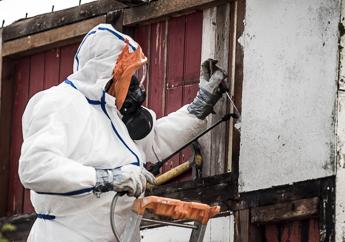
The Division of Air Quality's Asbestos Management Program works with the DNREC Division of Waste and Hazardous Substances and the Office of Management and Budget's Division of Facilities Management to protect the public from the health impacts of asbestos, which may lead to asbestosis, lung cancer, or mesothelioma. This program governs how asbestos is removed, transported, and disposed of in the state.
Until the 1980s, asbestos-containing products were used extensively in both commercial and industrial settings. The earth's naturally occurring, durable mineral asbestos was used for insulation of heating ducts as well as to create roofing tiles and siding materials.
What Is The New York State Department Of Health Asbestos Safety Training Program?
Before being licensed by the New York State Department of Labor Asbestos Licensing and Certification Unit, workers involved in asbestos removal must have received appropriate training through an accredited provider of asbestos safety training.
The Department of Health has regulatory oversight of New York State accredited asbestos safety training providers. Part of the Bureau of Occupational Health, the Asbestos Safety Training Program regulates specific training courses in nine disciplines that involve the handling, evaluation, sampling and removal of asbestos containing materials. This program evaluates applications from entities seeking to be New York State Department of Health-accredited asbestos safety training providers. It also audits and supervises existing providers in order to make sure they comply with 10 NYCRR Part.
Removing Asbestos
Before removing asbestos-containing materials during renovation or demolition of a structure containing asbestos, owners are advised (and may be required) to have an inspection by a Delaware licensed asbestos inspector.
Owners, asbestos contractors, and/or demolition companies must inform the US EPA, and DNREC as applicable, at least 10 days before any activity that may disturb asbestos-containing material.
Asbestos-containing material may not be carried by hazardous waste haulers and must only be disposed in authorized disposal facilities.
Fire companies and facility owners must comply with the notification and approval requirements set forth in Delaware Open Burning Program.
How Often Do I Need To Train Or Do I Need To Complete Refresher Training?
Workers in asbestos must continue their education by attending annual refresher courses. Training is specific to each discipline and valid for one calendar year regardless of the expiration date on your New York State Department of Labor certificate or "hard card". After your training ends, you will be in grace and can't actively engage in asbestos work. Refresher training can be completed within a year after expiry of your training. Once your grace period expires (exactly two calendar years from the date of your last training course completion date), you are no longer eligible to complete refresher training and must repeat an initial course of training.
Getting Certified For Asbestos Removal
After the prerequisites have been met, certification candidates need to take the relevant training course for their discipline. The courses are usually managed by third parties accredited and last between 2 and 5 days, depending on what discipline. At the end of the course, candidates take an exam and need to score a minimum of 70% to pass.
After passing the examination and completing training, candidates can apply for certification in asbestos abatement. While the requirements for applying vary by state or discipline, some of them include:
- Application fee
- Copy of training certificate
- Photo of the candidate
- Information on Employment
- History of education
- Any enforcement actions were taken against the certification candidate
- Physical conducted by a physician in the last 12 months
Those with abatement projects in numerous states might need to acquire certification from each state that they plan to work in. While some states may have agreements that allow them to honor certificates from other states, these are not common.
Asbestos Abatement License Forms
- This certificate is issued to those who implement and analyze air monitoring plans during abatement. This person is often assigned the duty of acting as the building owner's representative.
- Submit documentation of valid, current DHEC training, and must have an approved
- Asbestos Abatement Supervisor course or Project Monitor course and
- NIOSH 582- Airborne Asbestos Sample & Evaluation (or documentation that the applicant has been certified as an Industrial Hygienist). Every year a supervisor refresher course is required to renew this license.
- Individuals who inspect a building for asbestos-containing material (ACM), in order to assess its condition and collect bulk samples.
- Submit documentation of valid, current training of a DHEC approved Building Inspector course.
- Issued to individuals who will plan all phases of an asbestos abatement project design from project site preparation through complete disassembly of all abatement area barriers.
- Send documentation of current, valid training from a DHEC-approved Project Designer course.
- Issued to individuals who will provide direct on-site supervision and guidance to workers engaged in abatement of regulated ACM (RACM). Obtaining this license also authorizes an individual to perform any duties of a Worker.
- Send documentation of current, valid training in a DHEC-approved Supervision of Asbestos Abatement Projects course.
- This certificate is issued to asbestos-abatement workers who are under the supervision of a licensed and accredited supervisor.
- Submit documentation of valid, current training of a DHEC approved (AHERA) Worker course.

Knowing the dangers of asbestos
Asbestos is dangerous because it's a known carcinogen, and inhaling or ingesting it is linked to mesothelioma, asbestosis and other health problems. Although asbestos isn't banned in the U.S., its use is limited. Asbestos-containing materials (ACM), however, still present a risk to the public as they are common building products used in houses, schools, and other structures constructed before 1980.
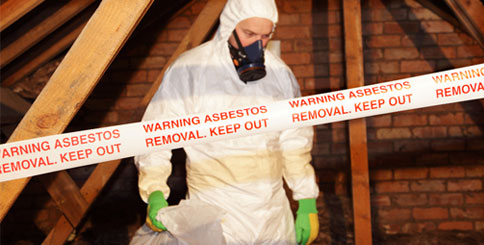
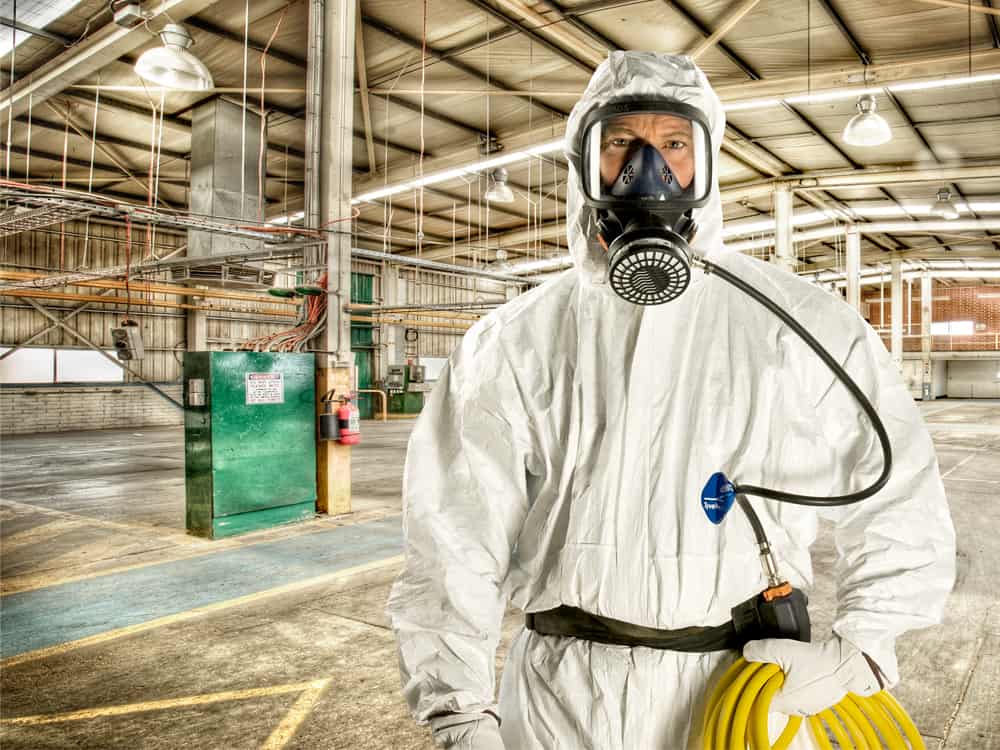
Abatement of asbestos involves the removal of products or materials from a structure in order to reduce the risk of being exposed to harmful asbestos fibers. It's best handled by a professional asbestos abatement company.
Short-Term Notification (5-Day Waiver)
Short-term notifications are used for projects that start in less than 5 days and have work requirement or waiting the 5 days would cause unnecessary hardship (ex. You may experience water loss, homeowner displacement, asbestos discovery during construction or other issues.
Notifications for short-term purposes are not permits or approvals. You do not need approval, and in most cases, you will not receive a response. We may reach out to request additional details regarding the project and reserve the right to deny short-term notifications.
To submit a short-term notification, send an email to the region where the work will take place using the inboxes listed below. Include the reason you are submitting a short-term notification, jobsite location, start and stop dates, type of material, and amount you are planning to remove. Next, you can use the online notice system to submit the official notice.
Group
- Issued to industrial manufacturing and electrical generating facilities and allows facility employees and long-term in-house contractors to perform abatement at the license holder's facility without having to obtain a separate license per employee per category
- the number of people who will be licensed
- The name, SSN and date of the training.
Inboxes for Regional Communities
- Island, San Juan and Skagit counties. Snohomish, Snohomish, And Whatcom counties
- King county
- Clallam, Jefferson, Kitsap, and Pierce counties
- Clark, Cowlitz, Grays Harbor, Klickitat, Lewis, Mason, Pacific, Skamania, Thurston, and Wahkiakum counties.
- Adams (west), Benton, Chelan, Columbia, Douglas, Franklin, Grant, Kittitas, Okanogan, Walla Walla, and Yakima counties.
- Adams (east), Asotin Ferry Garfield Lincoln Pend Oreille Spokane Stevens and Whitman counties.

Do Asbestos Contractors and Companies Need To Be Licensured?
Yes, asbestos companies and contractors must be licensed through the New York State Department of Labor Asbestos Licensing and Certification Unit.
What Asbestos Safety Training Courses Are Upcoming?
This schedule of approved courses for asbestos training is available online and updated by the New York State Health Department.
Management Planner
Any person who assesses the hazard posed by the presence of asbestos or asbestos containing material and/or who recommends appropriate response actions and a schedule for such response actions.

How Do I Become Certified To Work With Asbestos In New York?
Certification in New York State is two-step. To work with asbestos you must:
You must also be a New York State Department of Labor-licensed asbestos contractor if you are involved in asbestos work.
Was it possible to get training or become licensed/certified in another state?
You need to read and complete the Asbestos Safety Training Equivalency/Reciprocity Application (DOH-4353). This is an application for trainees from out-of-state who want to be able to prove that their training meets the requirements of Part 73, 10 NYCRR. Out-of-state applicants must complete the New York State refresher course if they are approved.
Getting Licensed
- Evidence of proof that workers' compensation insurance
- Good standing certificate
- Application fee
- Copy of the contractor license or number for contractors
- If a foreign entity needs a certificate of authority
- Liste of employees who are certified
- Ownership information
- Check out this list of abatement projects.
Annual Renewal Of Asbestos Certification
Abatement certificates expire each year. To keep their certificates, asbestos specialists must take an annual refresher course.
Failure to renew a certificate could result in disciplinary actions, such as suspension of certificate or revocation.